No Before-and-After Photos? What Can Doctors Show Instead?
A practical guide to creating educational medical content without relying on patient transformation photographs. For many doctors, before-and-after photographs have become a familiar way to explain treatment procedures and show patients what improvement may look like. Dermatologists use them to…
On this page
- 1. What Can Doctors Show Instead of Before-and-After Photos?
- 2. Four Practical Ways to Explain Treatments Without Patient Photos
- 3. One Topic, Multiple Posts: An Acne Scar Content Example
- 4. What Should Doctors Avoid When Creating Medical Visuals?
- 5. You Don’t Need Patient Transformation Photos to Educate Your Audience
A practical guide to creating educational medical content without relying on patient transformation photographs.
For many doctors, before-and-after photographs have become a familiar way to explain treatment procedures and show patients what improvement may look like.
Dermatologists use them to discuss acne scar treatments. Dentists use them to explain smile corrections. Plastic surgeons use them to discuss reconstructive procedures, while fertility specialists often use visuals to explain treatment stages.
But patient transformation photographs are not the only way to educate your audience. Doctors should understand the appropriate guidelines for using clinical images and treatment results. Read our Before and After Photos Guidelines for Doctors to learn more about responsible medical content practices.
Doctors can use medical diagrams, anatomical illustrations, treatment-process graphics, animations and evidence-based educational content to explain medical conditions and procedures.
With the National Medical Commission’s Guidelines on Ethical Advertising and Public Communication dated 6 October 2026, doctors should pay particular attention to how patient images, treatment outcomes and promotional content are presented online.
So, if you are wondering what to post instead of before-and-after photographs, here are some practical ideas you can start using.
1. What Can Doctors Show Instead of Before-and-After Photos?
The simplest approach is to shift the focus from showing a patient’s transformation to explaining the medical condition, treatment mechanism and recovery process.
Here are some examples across different medical specialties.
Dermatology: Explain Skin Conditions Through Medical Illustrations
Dermatology is a highly visual speciality. Patients often want to understand what is happening beneath their skin and how different treatments work.
Instead of relying on patient transformation photographs, dermatologists can create educational posts using:
- Acne scar types: Illustrations explaining ice-pick, boxcar and rolling scars.
- Skin layers: Diagrams showing the epidermis, dermis and deeper skin structures.
- Pigmentation: Illustrations explaining how pigmentation develops in different skin layers.
- Laser treatments: Graphics explaining how laser-based procedures interact with targeted skin structures.
- Hair growth cycle: Visuals explaining the anagen, catagen and telogen phases.
- Skin rejuvenation: Educational graphics explaining collagen production and skin ageing.
For example, a dermatologist can create a carousel titled:
“Not All Acne Scars Are the Same. Do You Know the Difference?”
Each slide can explain one scar type with a simple medical illustration.
This helps patients understand why different acne scars may require different treatment approaches.
Orthopaedics: Explain Injuries, Healing and Rehabilitation
Orthopaedic content can use anatomical diagrams and step-by-step illustrations to make complex conditions easier to understand.
Doctors can create:
- Fracture healing stages through bone illustrations.
- Knee joint anatomy and common problems.
- Ligament injuries and how they affect joint movement.
- Knee replacement procedure illustrations.
- Spine and disc-related condition diagrams.
- Rehabilitation exercises and recovery stages.
Post idea: “What Happens Inside Your Knee During a Knee Replacement?”
A sequence of medical illustrations can explain the joint, the affected structures and the basic steps involved in the procedure.
Dentistry: Use Tooth and Jaw Illustrations
Dentists can explain procedures and oral health conditions without showing individual patient transformations.
Useful content ideas include:
- Tooth alignment and orthodontic treatment diagrams.
- Dental implant placement illustrations.
- Root canal treatment explained step by step.
- Gum disease progression.
- Tooth decay and enamel damage.
- Wisdom tooth positioning and extraction illustrations.
Post idea: “What Actually Happens During a Root Canal Treatment?”
Use a tooth cross-section to explain the pulp, root canals, cleaning process and restoration.
Plastic Surgery: Explain Anatomy and Surgical Procedures
Plastic surgeons can use medical illustrations to educate people about surgical procedures and reconstructive techniques.
Examples include:
- Surgical anatomy diagrams.
- Scar formation and wound healing stages.
- Reconstructive surgery illustrations.
- Skin grafting explained through diagrams.
- Surgical planning and anatomical considerations.
- Post-surgical healing stages.
The focus should remain on explaining the procedure, its medical purpose, possible risks and recovery considerations—not promoting a particular result.
IVF and Gynaecology: Make Reproductive Health Easier to Understand
Fertility treatment involves several stages that patients may find difficult to understand.
Doctors can use educational visuals such as:
- IVF treatment stages.
- Ovulation and menstrual cycle diagrams.
- Egg and sperm development illustrations.
- Embryo development stages.
- Embryo transfer process illustrations.
- Uterus and reproductive anatomy diagrams.
Post idea: “What Happens During an IVF Cycle? Understand the Process Step by Step.”
A simple timeline can explain the different stages without using patient photographs or implying a guaranteed pregnancy outcome.
Other Medical Specialties
The same approach can work across other specialities.
- Cardiology: Heart anatomy, blood circulation, coronary artery blockages and stent placement illustrations.
- Ophthalmology: Eye anatomy, cataract development and lens replacement diagrams.
- General Surgery: Hernia anatomy, gallstone formation and surgical procedure illustrations.
- ENT: Sinus anatomy, nasal blockage, ear structures and hearing mechanisms.
The idea is simple: show the medical concept, not necessarily the patient’s transformation.
2. Four Practical Ways to Explain Treatments Without Patient Photos
Doctors can build an entire educational content strategy around four types of visuals.
1. Medical Diagrams
Use diagrams to explain the condition, affected body parts and underlying medical problem.
For example:
- Acne scar types.
- Knee joint anatomy.
- Tooth decay.
- Heart valve structure.
- Reproductive anatomy.
Content format: Single-image posts, labelled diagrams or carousels.
2. Treatment Illustrations
Explain how a medical treatment or procedure works through illustrations.
For example:
- How microneedling works.
- How a dental implant is placed.
- How a cataract procedure replaces the cloudy lens.
- How a knee replacement works.
Content format: Step-by-step carousels, animations or short educational videos.
3. Process Graphics
Many medical procedures involve multiple stages. A simple timeline or flowchart can help patients understand the process.
For example:
- IVF treatment stages.
- Fracture healing stages.
- Hair growth cycle.
- Post-surgical rehabilitation.
- Dental implant treatment timeline.
Content format: Timelines, flowcharts and infographic-style educational posts.
4. Expected Outcomes and Realistic Expectations
Patients often want to know what improvement a treatment may offer.
Doctors can explain this without showing patient transformation photographs.
For example, when discussing acne scar treatment, explain:
- Which types of scars may respond to different treatments.
- Why treatment selection depends on scar type and skin condition.
- Why multiple sessions may sometimes be required.
- What factors influence the response to treatment.
- What limitations and possible side effects patients should understand.
Avoid statements such as “100% improvement”, “permanent results guaranteed” or “complete scar removal”.
Medical outcomes vary from patient to patient. Educational content should reflect that reality.
3. One Topic, Multiple Posts: An Acne Scar Content Example
Let’s take one common dermatology topic: Acne Scar Treatment.
Instead of creating one before-and-after post, a dermatologist can turn this topic into an entire educational content series.
Types of acne scar on facial skin layer. Rolling, Boxed and Icepick scars isolated white background. 3D vector Medical diagram about skin problem from acne.
Post 1: Understand Different Types of Acne Scars
Explain ice-pick, boxcar and rolling scars using labelled skin diagrams.
Format: Educational carousel
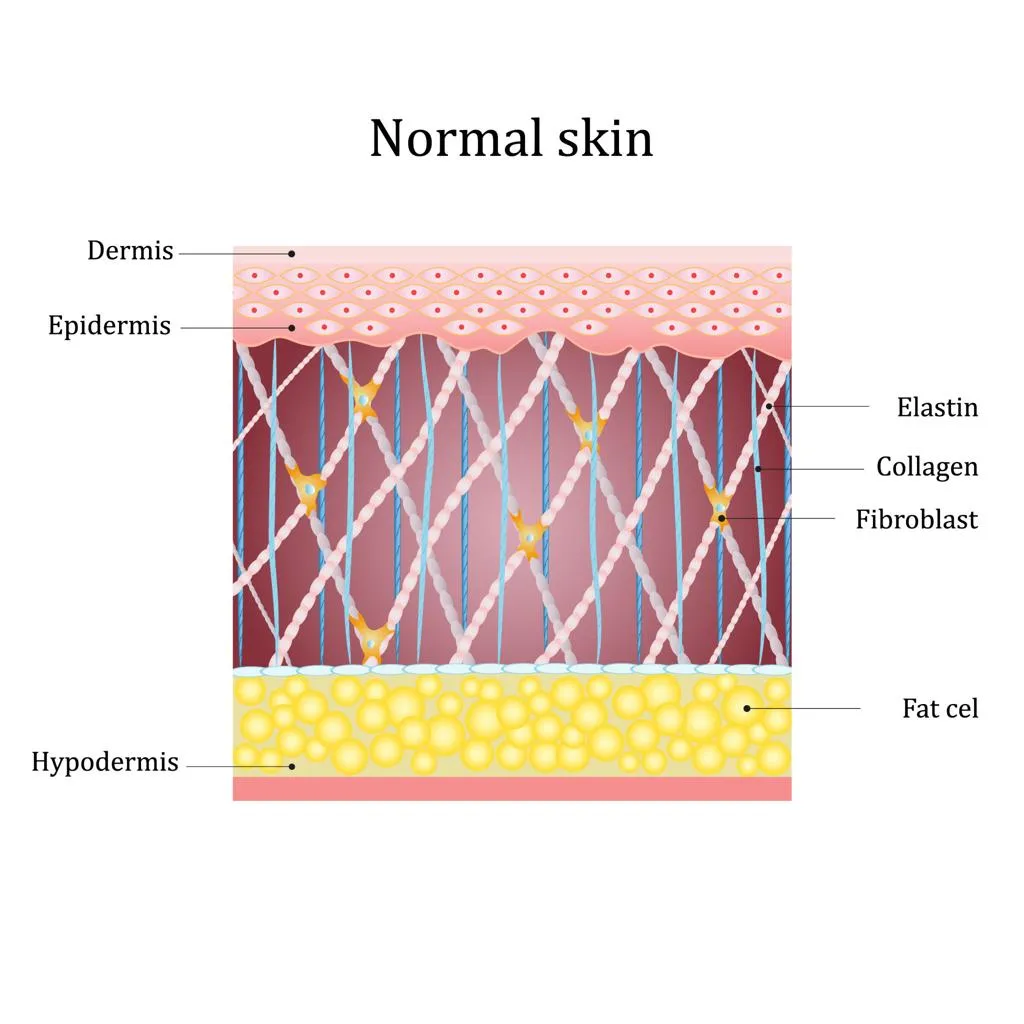
Post 2: What Happens Beneath the Skin?
Explain how changes in collagen and skin structure contribute to depressed scars.
Format: Single educational graphic
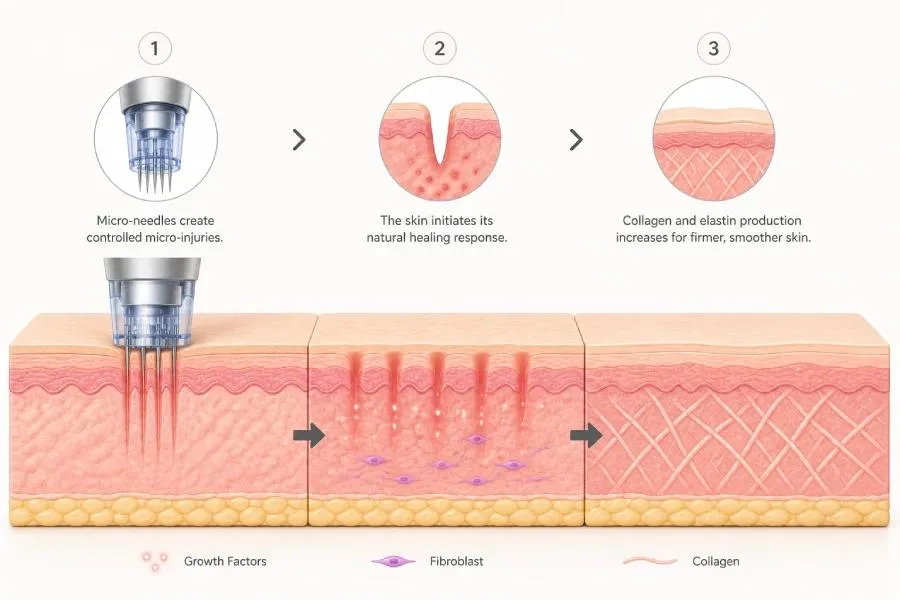
Post 3: How Does Microneedling Work?
Use a medical illustration to explain the treatment mechanism and collagen response.
Format: Short educational Reel
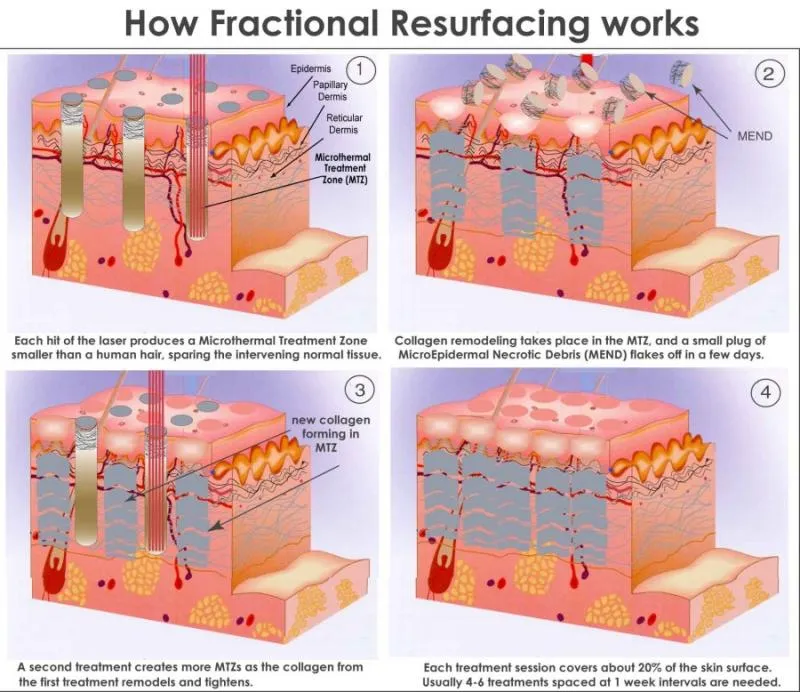
Post 4: How Does Laser Treatment Work for Acne Scars?
Explain the basic mechanism of laser resurfacing and how treatment selection varies.
Format: Animated explainer or carousel
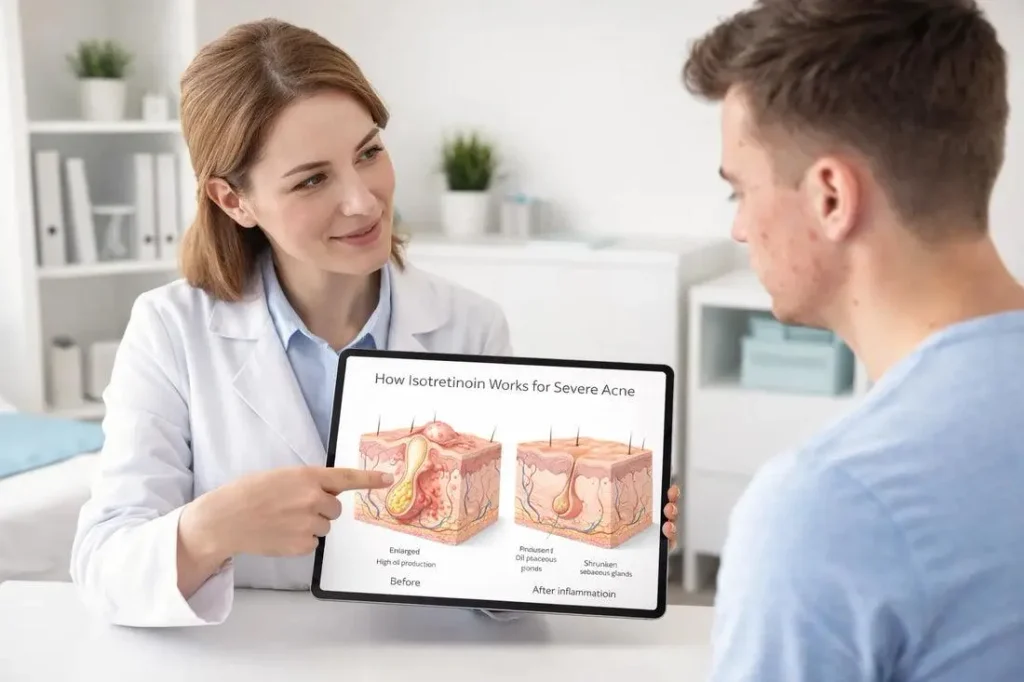
Post 5: Why Does Acne Scar Treatment Differ From Person to Person?
Explain the importance of scar type, skin condition, medical assessment and individual treatment planning.
Format: Doctor talking-head Reel
One medical topic can therefore become five useful educational posts without relying on patient transformation photographs.
The treatment information should always be reviewed by the treating doctor before publication. Different acne scar types may require different approaches, and treatment plans are individualised.
4. What Should Doctors Avoid When Creating Medical Visuals?
Using illustrations instead of patient photographs does not automatically make every post appropriate.
Doctors should pay attention to the following:
1. AI-generated patient transformations presented as real results
Do not create an artificial patient image showing dramatic improvement and present it as an actual treatment outcome.
2. Guaranteed treatment claims
Avoid phrases such as:
- 100% results guaranteed.
- Complete cure.
- Permanent results for everyone.
- Guaranteed improvement in one session.
3. Exaggerated improvement claims
Do not use unrealistic visuals or descriptions that create expectations unsupported by medical evidence.
4. Promotional content disguised as education
A medical illustration should genuinely explain a condition or treatment. Adding exaggerated claims, inducements or patient solicitation language can change the nature of the communication.
5. Misleading use of patient images
Doctors should also follow appropriate guidelines when sharing patient photographs, testimonials and clinical images. Refer to our Patient Testimonial Checklist for Doctors for additional guidance on responsible social media communication. They also clarify that patient consent alone does not make an otherwise prohibited promotional practice permissible.
The guidelines specifically restrict promotional publication of cases, surgical results and before-and-after photographs, subject to the stated scientific or educational exception and other applicable requirements. They also address AI-generated or manipulated patient images, testimonials and clinical outcomes.
Doctors should review the complete applicable guidelines before publishing clinical images or treatment-related content. The examples in this article are practical educational suggestions, not a declaration that every proposed post is automatically compliant.
5. You Don’t Need Patient Transformation Photos to Educate Your Audience
A strong medical social media presence does not depend on dramatic patient photographs.
Doctors can demonstrate their knowledge through:
Doctors can also use social media platforms to share educational information and build their online presence.
- Accurate medical illustrations.
- Clear explanations of medical conditions.
- Treatment-process graphics.
- Educational animations.
- Evidence-based information.
- Realistic discussions about treatment expectations.
The purpose of medical content should be to help people understand their health, not to create unrealistic expectations about treatment outcomes.
You don’t need patient transformation photographs to educate your audience. You need clear medical knowledge, accurate visuals and responsible communication.
How Satej Infotech Helps Doctors Build an Educational Digital Presence
At Satej Infotech, we help doctors and healthcare organisations communicate their medical expertise through structured digital marketing, website development, SEO and social media content. Explore our Digital Marketing Services for Doctors to understand how a structured digital growth strategy can help healthcare professionals strengthen their online visibility, build patient trust and support sustainable practice growth.
Our focus is on creating informative, easy-to-understand content that helps healthcare professionals build a consistent online presence while keeping applicable professional guidelines in mind.
Website: www.satejinfotech.in
WhatsApp: 9156044824
Frequently Asked Questions
What can doctors post instead of before-and-after photos?
Doctors can use medical diagrams, anatomical illustrations, treatment-process graphics, animations and evidence-based educational posts to explain medical conditions and treatments.
Can dermatologists explain acne scar treatment without patient photos?
Yes. Dermatologists can use illustrations showing different acne scar types, skin layers, collagen formation and treatment mechanisms to educate patients.
What kind of medical illustrations can doctors use on Instagram?
Doctors can use labelled anatomical diagrams, disease-process illustrations, procedure explanations, treatment timelines and recovery-stage graphics, provided the content is accurate and appropriately presented.
Can doctors use AI-generated medical images?
AI can assist with creating educational illustrations, but doctors should check their accuracy and ensure they do not create misleading representations. The NMC’s October 2026 guidelines specifically address AI-generated or AI-assisted promotional content, synthetic patient representations and manipulated clinical outcomes.
Are before-and-after photographs allowed for doctors under NMC guidelines?
The October 2026 guidelines restrict the promotional publication of cases, surgical results and before-and-after photographs, subject to the specified scientific or educational exception and other applicable requirements. Patient consent alone does not make a prohibited promotional practice permissible.